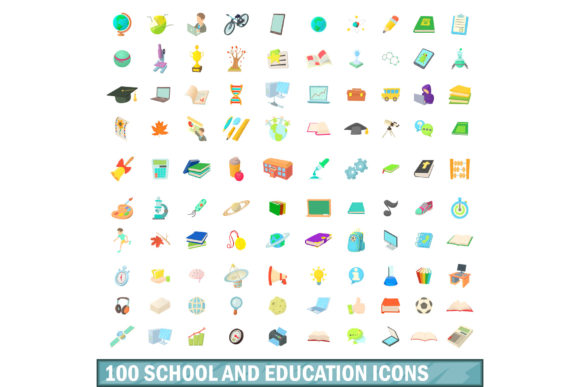
Integrating Education - SCHOOL Vector Icons into Professional Design Workflows
In the modern digital landscape, visual communication is not merely an aesthetic choice; it is a functional necessity. Whether you are an educator preparing curriculum materials, a small business owner launching a tutoring service, or a graphic designer crafting branding assets for an ed-tech startup, the speed and quality of your visual resources directly impact your output. This is where specialized assets like Education - SCHOOL vector icons become indispensable. These are not just simple images; they are versatile tools designed to streamline the creative process, ensuring consistency and professionalism across various media formats.
Understanding how to effectively integrate these icons into your workflow requires more than just downloading a file. It involves recognizing where they fit within the broader lifecycle of a project, from initial planning to final distribution. By treating these assets as integral components of your design system, you can enhance efficiency, maintain brand coherence, and reduce the technical friction often associated with high-quality printing and digital display.
The Strategic Role of Vector Assets in Educational Branding
Before diving into the technical specifications, it is crucial to understand the strategic value of using dedicated icon sets. In educational contexts, clarity is paramount. Icons serve as visual anchors that help users quickly identify sections, understand instructions, or navigate complex information. The Education - SCHOOL collection is specifically curated to reflect the nuances of academic and learning environments. Unlike generic clip art, these vectors are designed with clean lines and balanced proportions, making them suitable for both formal institutional use and modern, playful learning apps.
When incorporated early in the planning phase of a project, these icons help establish a visual language. For marketers and entrepreneurs, this means defining a brand identity that feels cohesive. If you are developing a series of worksheets, a website, or a mobile application, using a consistent set of icons ensures that the user experience remains intuitive. This consistency builds trust and reduces cognitive load for the audience, allowing them to focus on the content rather than deciphering inconsistent visual cues.
Technical Versatility: From Screen to Print
One of the most significant advantages of this specific asset pack is its dual-format delivery. The inclusion of both JPEG files at 300ppi high resolution and EPS file Illustration 10 Eps ensures compatibility with virtually any workflow. Understanding when to use each format is key to maintaining quality control.
Leveraging EPS for Scalability and Editing
The EPS (Encapsulated PostScript) format is the backbone of professional vector graphics. Because vectors are mathematical representations of shapes rather than pixel grids, they can be scaled infinitely without losing quality. This makes the Education - SCHOOL EPS files perfect for large-format printing, such as banners, posters, or signage for school events. Furthermore, EPS files are editable in industry-standard software like Adobe Illustrator, CorelDRAW, and Inkscape.
For designers, this editability is crucial. You may need to adjust the color palette to match specific brand guidelines or modify certain elements to better suit a particular context. The EPS format allows for this level of customization, ensuring that the icon integrates seamlessly into your existing design ecosystem. It also supports cutting machines, making these files ideal for creating physical merchandise, such as vinyl decals for classroom windows, custom stickers for student rewards, or laser-cut wooden signs.
Utilizing High-Resolution JPEGs for Immediate Deployment
While vectors offer flexibility, there are scenarios where raster images are more practical. The included JPEG files, rendered at 300 pixels per inch (ppi), provide high-quality static images ready for immediate use. This resolution is the standard for professional printing, ensuring that text and lines remain crisp when printed on paper. These files are ideal for users who do not have access to vector editing software or who need to quickly insert images into word processors, presentation slides, or basic web layouts.
For educators and administrators, the JPEGs simplify the process of creating handouts, newsletters, and certificates. You can drag and drop these images directly into Microsoft Word, Google Docs, or PowerPoint without worrying about complex file conversions. This ease of use saves valuable time, allowing professionals to focus on content creation rather than technical troubleshooting.
Workflow Integration and Practical Implementation
To maximize the utility of the Education - SCHOOL icons, consider integrating them into your standard operating procedures. Here are several practical ways to incorporate these assets into different stages of your work:
- Pre-Production Planning: During the brainstorming phase, use the icons to create mood boards or wireframes. This helps visualize the final product and ensures that the visual tone aligns with your educational goals.
- Content Creation: When designing worksheets or digital courses, use the icons as bullet points or section headers. This breaks up large blocks of text and improves readability, which is essential for retaining student attention.
- Brand Consistency: Establish a style guide that specifies how and where these icons should be used. Define clear rules regarding sizing, spacing, and color variations to ensure that all team members produce consistent materials.
- Quality Control: Before finalizing any print job, always preview the EPS file at 100% zoom to check for any unintended artifacts or alignment issues. For digital use, optimize the JPEGs for web performance if necessary, balancing quality with file size.
Moreover, these icons interact well with other design elements. They can be combined with typography, photographs, and illustrations to create layered, dynamic compositions. For instance, placing a school icon over a subtle textured background can add depth to a flyer, while using it as a minimalist line icon can convey sophistication in a corporate training manual.
Long-Term Value and Organization
Investing in high-quality vector assets pays dividends over time. Unlike single-use images, a comprehensive icon set like Education - SCHOOL can be reused across multiple projects and years. To facilitate this long-term use, proper organization is essential. Create a dedicated folder structure on your server or cloud storage, categorizing files by type (EPS vs. JPEG) and theme. Tagging files with relevant keywords can also speed up retrieval, ensuring that you can find the right icon when deadlines are tight.
Additionally, keeping a library of modified versions of these icons can save time in future projects. If you frequently adjust colors to match different seasonal themes or event brands, save these variations as templates. This proactive approach reduces repetitive tasks and allows for faster turnaround times on recurring assignments.
Conclusion
The Education - SCHOOL vector icons represent more than just decorative elements; they are functional tools that enhance communication, streamline workflows, and elevate professional standards. By understanding the technical differences between EPS and JPEG formats and strategically integrating these assets into your design process, you can achieve greater efficiency and consistency. Whether you are printing large banners or designing digital interfaces, these icons provide the versatility needed to meet diverse business and educational needs. Embrace these resources as part of your core toolkit, and observe how they contribute to clearer, more impactful visual storytelling in your professional endeavors.