Special Education Teacher Leopard: A Practical Guide to Formats, Uses, and Design Flexibility
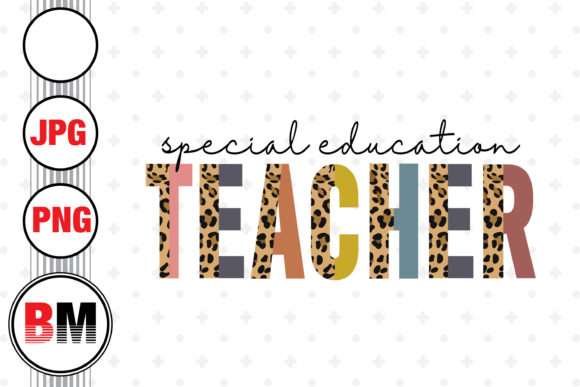
In the world of custom apparel and educational advocacy, visual identity plays a subtle yet powerful role. For professionals in special education, finding designs that balance professional pride with personal style can be challenging. The Special Education Teacher Leopard design has emerged as a popular choice, merging the recognizable symbolism of leopard print with clear, supportive messaging for educators. However, owning a digital design is only half the equation; understanding how to utilize the file formats effectively is what transforms a simple image into a high-quality product.
This guide explores the practical applications of this specific design asset, breaking down the technical specifications included in the download package. By understanding the distinct roles of SVG, DXF, PNG, PDF, AI, JPG, and EPS files, educators and crafters can make informed decisions about which format suits their specific project needs, whether they are creating classroom materials, personal apparel, or gifts.
Understanding the Design Appeal and Context
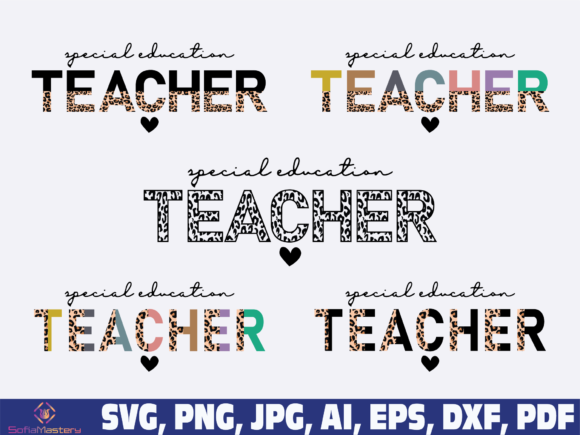
The Special Education Teacher Leopard motif is not merely a trend; it represents a blend of strength, patience, and unique style often associated with educators who work with diverse learning needs. Unlike generic teacher appreciation graphics, this design offers a distinctive aesthetic that stands out in staff lounges, at school events, or during casual wear. The leopard pattern adds a layer of modern flair, moving away from traditional apples and books imagery toward something more personalized and contemporary.
When evaluating this design against other educational graphics, the key differentiator is its versatility. It appeals to a broad demographic of adults aged 20–50 who appreciate both professionalism and fashion-forward elements. Whether used on a tote bag for carrying lesson plans or a t-shirt for spirit week, the design communicates solidarity and pride without being overly formal. This balance makes it a valuable resource for those looking to express their professional identity in a relaxed, approachable manner.
Navigating the File Formats: A Technical Breakdown
The download package for the Special Education Teacher Leopard includes a zipped folder containing seven distinct file types: SVG, DXF, PNG, PDF, AI, JPG, and EPS. Each format serves a specific purpose in the digital creation workflow. Understanding these differences is crucial for achieving professional results.
Vector Files: SVG, DXF, EPS, and AI
Vector files are essential for cutting machines and scalable graphics. They use mathematical paths rather than pixels, allowing the image to be resized infinitely without losing quality.
- SVG (Scalable Vector Graphics): This is the most versatile format for modern crafters. The SVG file included in the pack is optimized for use with Cricut Design Space and Silhouette Designer Edition. It is also compatible with other popular software such as Make The Cut (MTC), Sure Cuts A Lot (SCAL), and the Brother Scan and Cut “Canvas” software. If you plan to cut vinyl decals for water bottles, laptops, or heat transfer vinyl (HTV) for shirts, the SVG is your primary tool.
- DXF (Drawing Exchange Format): This format is specifically designed for users of Silhouette Basic Edition. Since the basic version of Silhouette Studio does not support SVG imports, the DXF file ensures that users with entry-level software can still access the full potential of the design. It functions similarly to the SVG but is structured differently for compatibility.
- EPS (Encapsulated PostScript): Ideal for professional graphic designers, the EPS file works seamlessly with industry-standard programs like Adobe Illustrator, CorelDraw, and Inkscape. This format is best suited for users who need to edit the vector paths extensively, change colors precisely, or integrate the leopard design into larger composite illustrations.
- AI (Adobe Illustrator): Included for users already working within the Adobe ecosystem, this native file type allows for immediate editing without conversion issues. It preserves layers and editable text properties if applicable, streamlining the workflow for professional designers.
Raster and Print-Ready Files: PNG, JPG, and PDF
Unlike vector files, raster images are made of pixels. They are best suited for digital display or direct printing where resizing is not required.
- PNG (Portable Network Graphics): The PNG file provided features a transparent background. This is critical for sublimation printing or when overlaying the design onto colored fabrics digitally. Because there is no white box around the image, it blends seamlessly into the material. It is also useful for digital stickers or web-based graphics.
- JPG (Joint Photographic Experts Group): This is a standard photo file with a solid background. While less flexible than PNG for layering, JPGs are universally compatible and ideal for quick previews, social media posts, or simple print jobs where transparency is not needed.
- PDF (Portable Document Format): The PDF is designed for immediate printing. It is the best choice if you want to print the design on paper for classroom decorations, handouts, or iron-on transfers using a standard home printer. It ensures the layout remains fixed regardless of the device used to open it.
Practical Applications and Product Ideas
The versatility of the Special Education Teacher Leopard design allows it to be applied across a wide range of products. Knowing which file to use for each application can save time and reduce material waste.
Apparel and Wearables: For t-shirts, caps, and hoodies, the SVG file is typically the best starting point. Users can import it into their cutting software, mirror the image, and cut it from heat transfer vinyl. The result is a durable, professional-looking garment suitable for daily wear. For sublimation printing on polyester blends, the transparent PNG ensures the leopard pattern integrates smoothly with the fabric color.
Stickers and Decals: Teachers often use stickers for reward systems, planning, or personalizing classroom supplies. The SVG format allows for precise cutting of intricate leopard spots, while the PNG can be used for printable sticker paper if a cutting machine is not available. These can be applied to water bottles, laptops, or lesson planners.
Infant and Baby Items: The design is also suitable for baby onesies or infant caps, offering a cute way for educator parents to share their profession with their children. The soft curves of the leopard print translate well to smaller scales, provided the correct vector file is used to maintain clarity.
Evaluating Fit: When to Choose This Design
Deciding whether the Special Education Teacher Leopard is the right choice depends on your intended audience and production method. If you are looking for a bold, stylish statement that breaks away from traditional educational clichés, this design is an excellent fit. It is particularly effective for casual settings, team-building events, or personal branding.
However, if you require a strictly formal appearance for official school documentation or conservative administrative settings, a more traditional typographic design might be more appropriate. Additionally, users without access to cutting machines or graphic design software may find the vector files less useful, though the PDF and JPG options still provide value for standard printing needs.
Consider your technical comfort level. If you are new to crafting, start with the PDF for simple paper prints or the PNG for sublimation. As you gain confidence, explore the SVG and DXF files to unlock the potential of vinyl cutting. The inclusion of multiple formats ensures that regardless of your skill level or equipment, you can utilize the design effectively.
Making an Informed Decision
Ultimately, the value of the Special Education Teacher Leopard download lies in its comprehensive format support. By providing SVG, DXF, PNG, PDF, AI, JPG, and EPS files, the package accommodates a wide spectrum of users, from beginners with basic printers to professionals with advanced cutting machines and design software.
Before starting your project, assess your tools. Do you use Cricut or Silhouette? Prioritize the SVG or DXF. Are you working in Illustrator? Use the AI or EPS file. Need a quick printout? The PDF is ready to go. This flexibility ensures that the design remains a useful resource across various projects and timelines, making it a practical addition to any educator’s digital toolkit.